Discovering Taiwan through its people, food and an extraordinary capacity for resilience.
I’m watching a video of two middle-aged men skimming stones across the Pacific Ocean.
Hualien’s pebble beach, on Taiwan’s eastern coast, provides the perfect playground for two gents indulging in simple childhood pleasures. After a competitive duel, they build several towers of rocks before sitting down for a contemplative chat.
I’m one of those men. The other is my new friend Sam, who, having won the skimming contest, gently helped me understand the effect this island was having on me.
For some, Taiwan is a global microchip powerhouse at the centre of a geopolitical flashpoint. Others confuse it with Thailand, while an increasing number recognise its reputation as an emerging culinary and cultural destination.
Having visited Japan, Singapore, Thailand and Malaysia, I was intrigued to get under the skin of somewhere new.
I was joined by a seasoned Southeast Asia explorer. Luckily for me, it was my daughter Kate. Luckily for Kate, Dad was paying.
Go with the flow
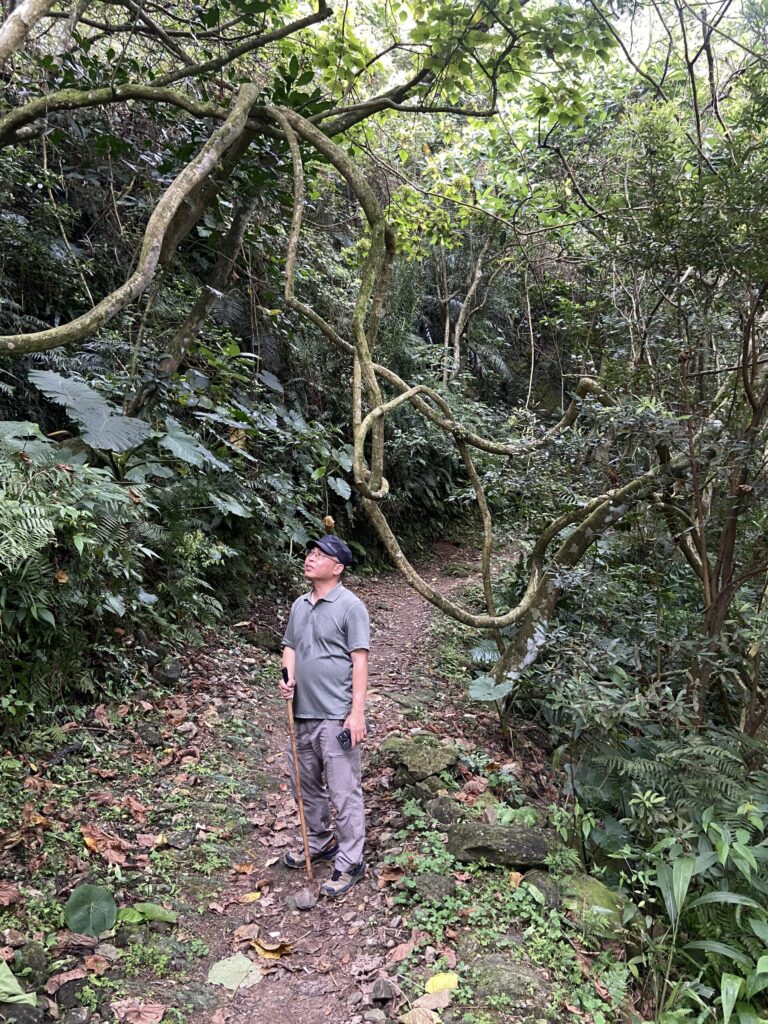
Sam is a softly spoken Hualien native and guide. We’ve just spent the day hiking in Taroko National Park, where a devastating earthquake in 2024 killed 19 people, injured more than 1,000 and destroyed numerous trails.
“We face natural disasters: earthquakes, typhoons. Nothing is forever; everything changes. If a landslide destroys a trail, they rebuild it. Another typhoon comes, another landslide, and they rebuild it again.”
A few hours with Sam set the tone for the trip. The penny was beginning to drop.
After several days of coastal cycling, vibrant night markets and a rather unusual whale-watching experience (more on that later), it was time to meet our next guide in Taipei.
A temple department store
Our guide in the capital was Carol, a tiny bundle of energy who introduced us to Taipei’s many fascinating contrasts.
Nothing captures Taiwan’s religious diversity and resilience quite like Lungshan Temple. Rebuilt several times following earthquakes and wartime damage, it is a remarkable symbol of the island’s ability to recover and reinvent itself.
Carol calls it a “temple department store”, with around 100 deities under one roof, blending Buddhist, Taoist and Chinese folk religions. Worshippers enter by the lion and leave by the tiger, throwing wooden moon blocks to seek divine advice on health, family and business.
Hungry?
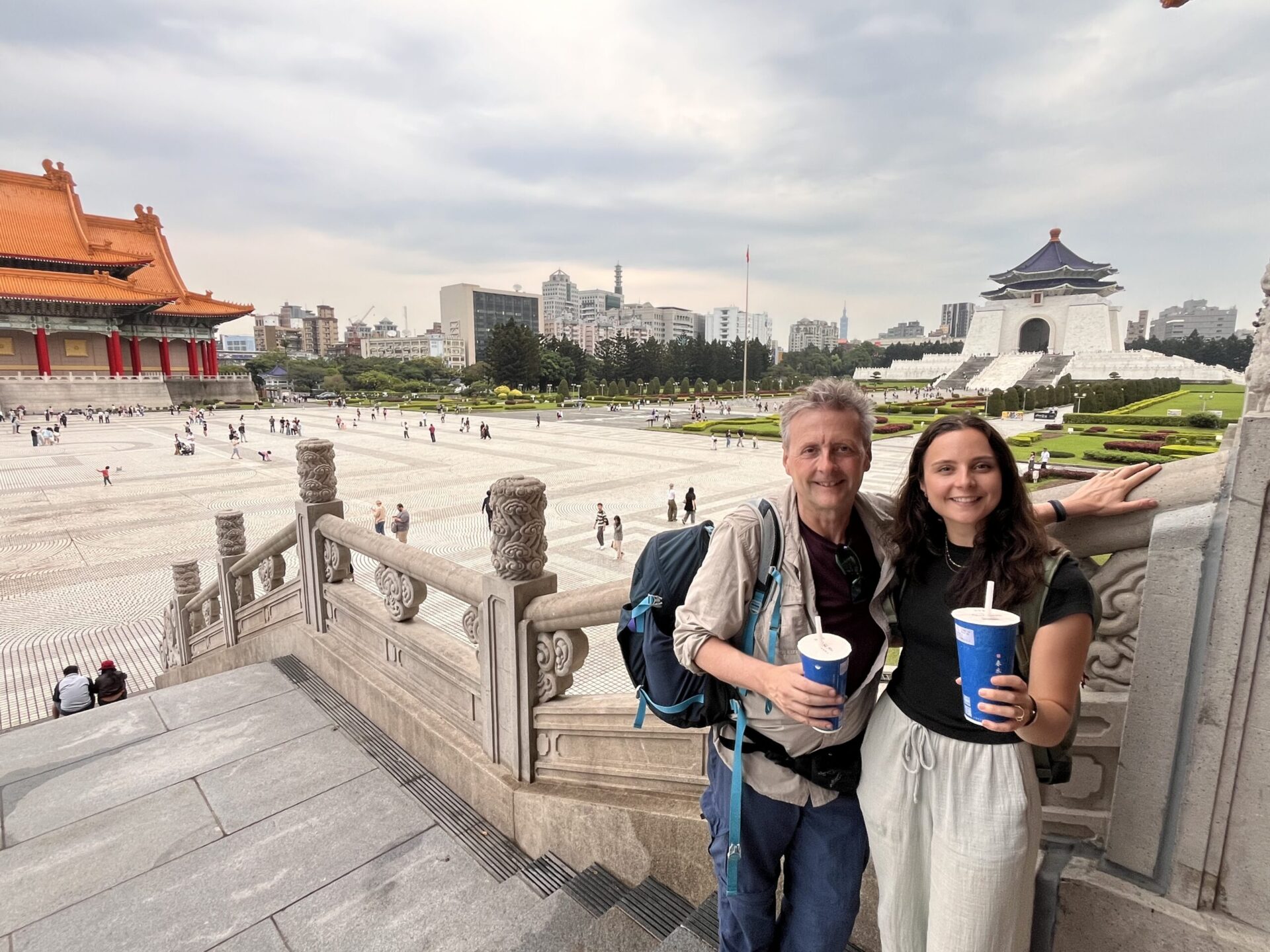
Carol introduced us to bubble tea, invented in Taiwan and now famous worldwide.
Footage of my first sip is unusable. Kate was laughing so much that all you see is a shaky image of a shocked man discovering a tapioca pearl slipping down his throat. I swallowed the pearl, but sadly not my pride.
For atmosphere and endless delicacies, Raohe Night Market in Songshan is the place to go.
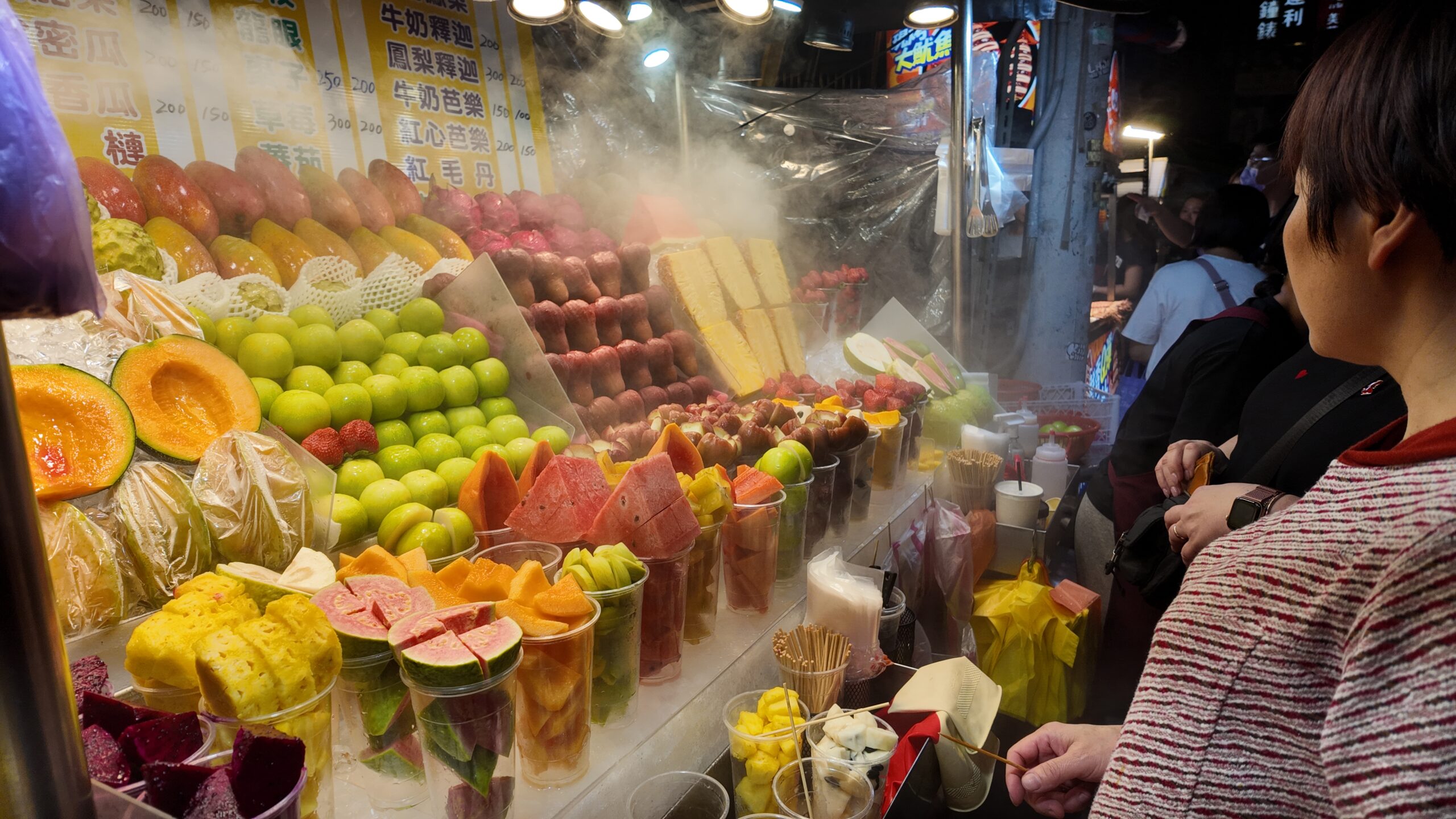
I was tempted by beef noodle soup, steamed buns, oyster omelettes, fried squid and spicy sausages. In the end, I went for pork belly bites. My vegetarian daughter settled for sweet potato balls and fried mushrooms. We finished with custard pancakes.
Food is central to Taiwan’s identity, and nowhere is that more apparent than at a night market. Families, couples, shift workers and tourists cram together in wonderfully organised chaos.
Sliding doors and tea ceremonies
One evening, we tracked down Alchemy Speakeasy in Taipei’s Xinyi district. After navigating a dimly lit corridor, we discovered a sliding panel revealing an intimate, colonial-style bar filled with jazz and cosy alcoves. Kate, clutching my credit card, explored the cocktail menu. One arrived topped with pork crackling, which the carnivore in the party demolished before the vegetarian could take offence.
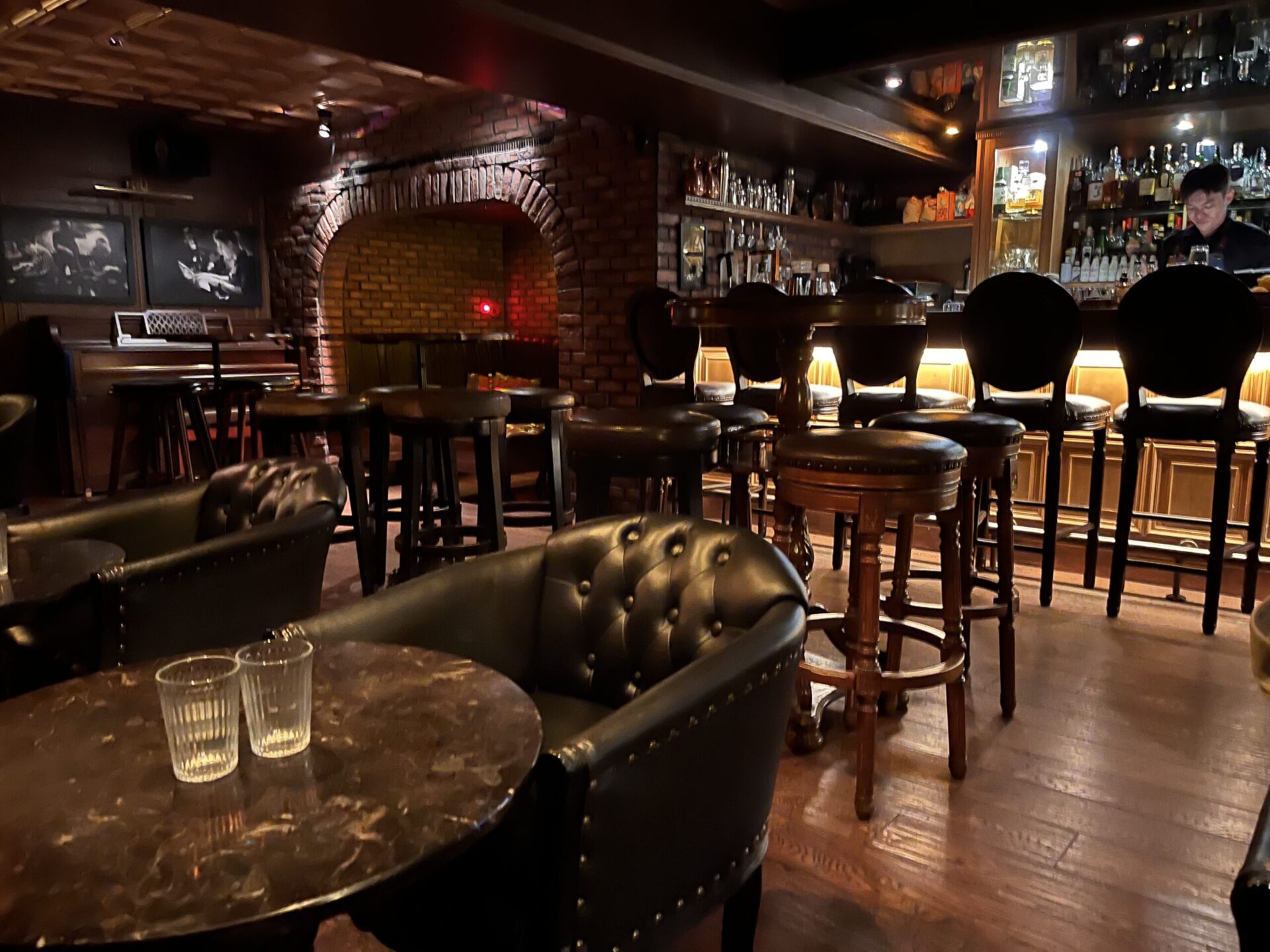
Getting out proved just as challenging as getting in, until a waiter pushed a nearby bookcase to reveal our escape route.
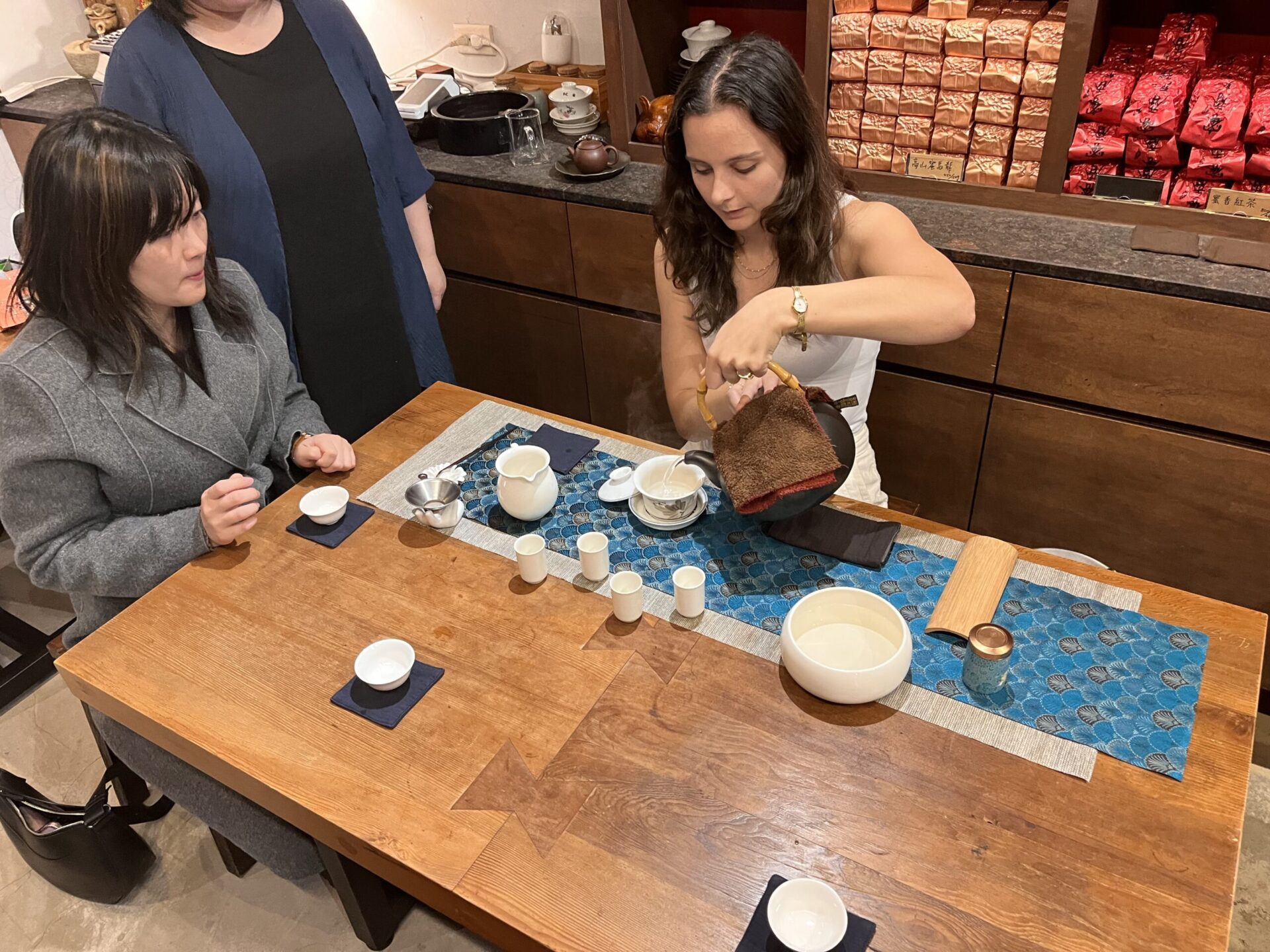
A different experience awaited us in the hills above Taipei, where we learnt the rituals of a traditional Taiwanese tea ceremony.
“The philosophy was simple: slow down and enjoy the company around you.”
Contrasts and contradictions
Taipei is a city of contrasts. Faded Victorian-style houses reminded me of old Berlin, while a turn around the corner revealed leafy avenues, boutique coffee shops and trendy bars. In Liberty Square, students were freestyle dancing while, behind them, unsmiling guards clicked their shoes and twirled their guns during the changing-of-the-guard ceremony at Chiang Kai-shek Memorial Hall.
Perhaps the most striking contrast came back in Hualien.
Cycling along the promenade, we watched families playing on the beach while a military exercise unfolded in the distance. Sandcastles and picnics juxtaposed with explosions and military aircraft: a reminder of the contradictions defining this fascinating island.
For Kate, Taiwan shared similarities with South Korea, particularly Seoul’s energetic night markets. Having both travelled extensively in Japan, we also noticed similarities in food, transport, architecture and the warmth of the people.
To me, Taiwan feels like a slightly rougher-edged, more relaxed version of Japan. If the two were siblings, Taiwan would be the casually dressed, chilled-out younger brother of the smarter, better-behaved older sibling.
Nature and conservation
Kate often finds ethical travel experiences difficult to come by in this part of the world. In Hualien, however, we discovered the Kuroshio Ocean Education Foundation, whose whale-watching trips reinvest proceeds into marine conservation. After a detailed briefing, we enjoyed a glorious boat trip without spotting a single whale.
We didn’t mind. They don’t chase whales or use tricks to attract them. We were happy knowing our contribution supported a worthwhile cause.
Back in Taroko National Park, Sam had pointed out the ancient banyan trees. Rather than relying on a single trunk, they send down aerial roots that grow into supporting pillars, creating vast interconnected networks. Below us, the gorge was scarred with destroyed bridges and severed roads, yet these trees had survived. For me, they became a blueprint for Taiwan: a collective canopy supported by the distinct yet deeply connected histories of its indigenous people, religions and languages.
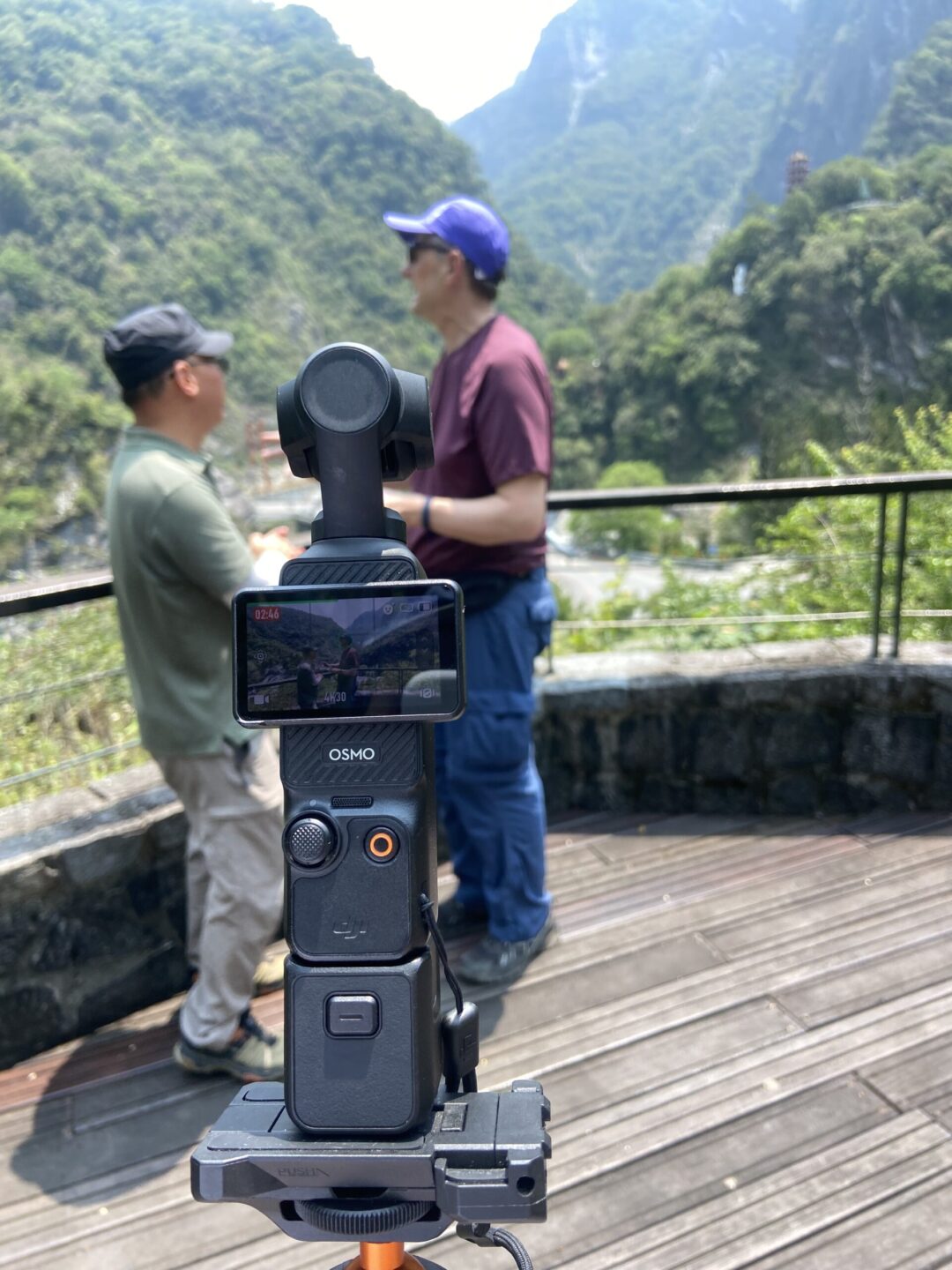
Back on the beach, I thought our playtime was over. I was wrong. Sam had one last game in mind.
He handed me five small rocks and challenged me to demolish the towers we’d built earlier. I took great delight in destroying mine first, drawing level after his earlier skimming victory.
“What shall we do now?” I asked. “Rebuild the towers, Mark. Rebuild. That’s what we always do.”
Find Out More
This journey was arranged by Kodama Travel, which works with local guides and conservation partners to create travel experiences that support local communities. kodamatravel.com.
Mark Cummings is a broadcaster and travel storyteller whose adventures explore the people, places and experiences that make travel memorable.
Discover more of Mark’s stories and videos at markcummingsandgoings.com.

EXPLORE YOUR WAY